By Comfort Ntaji
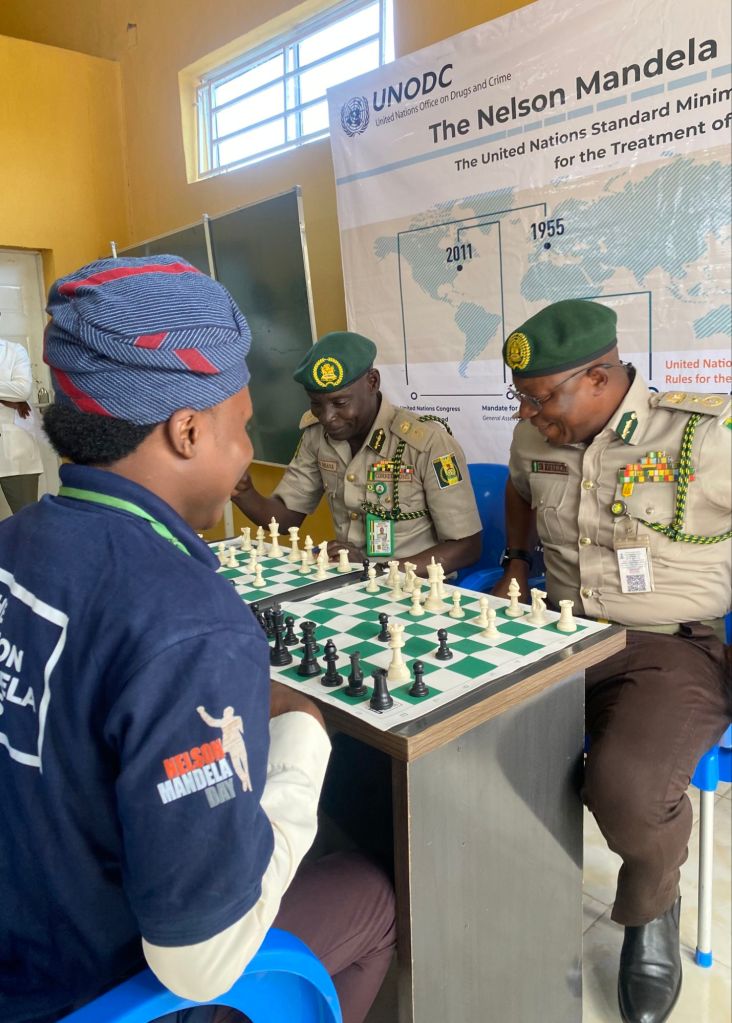
In commemoration of the legacy of Nelson Mandela , the United Nations Office on Drugs and Crime (UNODC), the Nigerian Correctional Service (NCoS) and the innovative non-profit organization Chess in Slums Africa have collaborated to bring the game of chess to the Maiduguri Maximum and Medium Security Custodial Centers, in Borno state.
A statement signed by Chioma Ekene-Ugwu UNODC communication officer noted that the initiative is targeted at breaking the stigma associated with incarceration and highlighting the potential for growth and change within inmates.
Speaking on the importance of this initiative, the Deputy Country Representative of UNODC in Nigeria, Danilo Campisi, said “Chess, with its intellectual rigor and strategic thinking, can equip inmates with critical life skills, improve their mental health, and provide a constructive outlet for their energy. While inmates (prisoners) may have made wrong choices in life, it is crucial that we support and empower them with skills that aid their rehabilitation and reintegration into society. UNODC is excited about this initiative and the partnership with the Nigerian Correctional Service and Chess in Slums Africa. Through this programme, we hope to see the next chess champions emerge from the custodial centre.”
She further says the Controller General of Corrections Haliru Nababa, represented by the Deputy Controller of Corrections, Sylvester Nwakuche added “Chess holds transformative potential beyond its role as a recreational activity. It’s a game that cultivates critical thinking, concentration and decision making skills and attributes that are fundamental to personal growth and rehabilitation. By introducing chess into the Nigerian Correctional Service, we aim to provide inmates with a constructive outlet for their energies.”
According to her, Tunde Onakoya, Founder of Chess in Slums Africa, shared his vision: “We have seen firsthand how chess can transform lives in the most challenging environments. Bringing chess to custodial centres is a natural extension of our mission to use the game as a tool for social change. We are honoured to partner with UNODC to make this a reality.”
On their part, she notes that inmates expressed their excitement about the programme, stating that learning chess will provide them with a mental escape and a new way to approach problem-solving. One inmate who participated in the pilot phase shared, “Chess teaches us to think before we act, to plan ahead. These are lessons that go beyond the game”
This initiative was launched following the commissioning and handover of a newly built and equipped clinic and a furnished showroom constructed to display products made by inmates from the two custodial centres in Borno state, the day before.
This comes after UNODC also donated sports equipment and apparel to six custodial centres in northeast Nigeria, including Maiduguri Maximum and Medium Security Custodial Centers in Borno, aiming to promote sports in these facilities.


 NewsAnnexOnline